Undergraduate thesis, BRAC University, 2025.
Supervised by Dr. Farig Yousuf Sadeque and Dr. Swakkhar Shatabda
Margin Trader is a deep reinforcement learning framework for portfolio management with margin accounts, covering leverage, short selling, maintenance margin and forced liquidation. We extended it with a transformer feature extractor that applies multi-head attention over 286 portfolio, price and technical-indicator inputs, five strategy agents (profit maximizer, momentum, trend following, mean reversion and volatility) whose actions are blended with the PPO policy through performance-based weights, seed-controlled noise on observations, actions and rewards, and an 11-component, profit-weighted reward. Agents were trained for 200,000 timesteps on Dow Jones stocks from 2009 to 2018 and tested from January 2019 to April 2020.
Over four runs against a baseline PPO agent, the enhanced agent was better on every metric in every run. It averaged a 14.9% accumulated return against 4.4%, a Sharpe ratio of 1.43 against 0.19, a Calmar ratio of 2.20 against 0.13, and a maximum drawdown of −9.4% against −33.6%, with lower annual volatility (14.3% against 23.2%). The project gave me hands-on experience formulating a constrained trading problem as an MDP, studying A2C, DDPG and PPO, and designing rewards that balance profit and risk.
Two recent Bengali model families, TigerLLM and TituLLM, rest on the premise that deep Bengali pretraining can stand in for parameter scale. We tested that premise with seven backbones from 0.6B to 4B parameters, chosen so that scale and pretraining depth vary separately, and asked whether less-is-more fine-tuning, shown at 32B in English, still works at this scale. Each model was fine-tuned with LoRA on 873 curated, decontaminated Bengali reasoning traces and scored on the same held-out problems before and after, so every comparison is paired.
Scale predicted accuracy and pretraining depth did not: Qwen3 rose from 3.6% at 0.6B to 16.8% at 1.7B and 44.8% at 4B, while four Bengali-specialised models from 1B to 3.2B stayed between 0.4% and 4.4%. Fine-tuning moved no model significantly. It changed output format, length and stopping behaviour without improving correctness, and an easier training set did significantly worse, which rules out difficulty miscalibration. We also measured a Bengali tokenizer tax of about 3.1×.
Md. Sudmun Hakim Mohammed Ali Hossain, Ahtesham Ibne Mostafa and Ipshita Bonhi Upoma. BRAC University, 2026.
A fully crossed, protocol-frozen study of importance-weighted variational inference at three observation resolutions (2, 16 and 256 levels), with exact discrete likelihoods so every condition is comparable in bits per dimension under one fixed architecture. We ran 162 runs across resolution, sample count and estimator (IWAE and DReG), with three seeds each on MNIST and EMNIST-Letters, sealed test splits and paired bootstrap intervals. I built the training pipeline, the pass/fail pilot gate that froze the protocol, the experiment runner and the SHA-256 fingerprinting of every result artifact.
DReG won 23 of 24 matched cells, but it was slower to its best checkpoint in every cell and less reproducible at 256 levels. Gains from more importance samples were monotone but sharply diminishing, and about six times larger in absolute bits at 256 levels than at 2. Across the two datasets, 52 of 54 matched contrasts agreed in sign.
CSE463 Computer Vision, Fall 2024
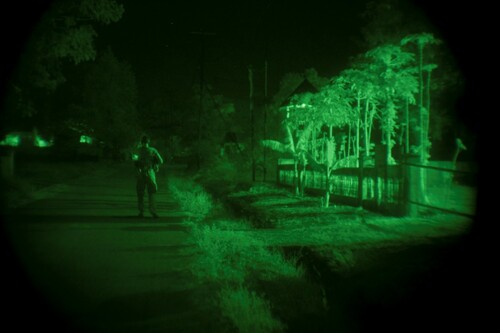
A ViT-32 encoder with a progressive deconvolution decoder that enhances and colorizes night-vision footage while keeping its structure intact. I curated a 40,000-image training set from ImageNet and designed a composite loss balancing perceptual quality, colour consistency and edge preservation. The model reached a colorfulness score of 39.33, above the state-of-the-art baselines we compared against.
CSE427 Machine Learning, Spring 2025
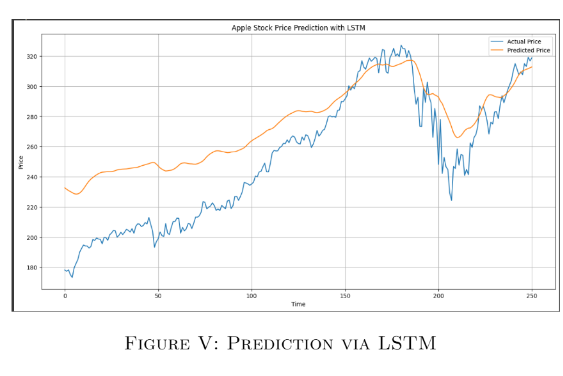
LSTM, BiLSTM and AdaBoost models trained on more than twenty years of Apple (AAPL) prices with technical indicators, using sliding-window sequences, normalization and hyperparameter tuning. The BiLSTM performed best (RMSE 12.04, MAE 9.50, R2 0.90).
CSE440 Natural Language Processing II, Fall 2024
Corpus statistics for Moby Dick with NLTK, cleaning and tokenizing 50,000 IMDB reviews, TF-IDF features with scikit-learn, and 100-dimensional GloVe embeddings. The vector for king − man + woman had a cosine similarity of 0.78 with queen, higher than king itself (0.75).
CSE423 Computer Graphics, Spring 2024
A 2D tank game in Python drawn from OpenGL points, lines and circles, with keyboard and mouse controls, timed animations, scoring, and pause and restart.