Portrait of Sudmun Hakim Soudho

Sudmun Hakim Soudho

I’m interested in reinforcement learning, multi-agent systems and large language models, especially RL for LLM reasoning and agents, along with NLP and computer vision. I’m still exploring different directions.

I graduated from BRAC University in Dhaka, Bangladesh, in October 2025 with a BSc in Computer Science (CGPA 3.90/4.00, Highest Distinction, top 4% of my entire class). My undergraduate thesis applied deep reinforcement learning, with a multi-agent committee of trading strategies, to margin-based portfolio management, and my most recent paper tests whether targeted Bengali pretraining can stand in for model scale in mathematical reasoning. I am especially drawn to the intersection of LLMs and reinforcement learning, namely RL with verifiable rewards for reasoning (including in low-resource languages such as Bengali), multi-agent LLM systems and their safety, and reward design for agents. I am exploring other domains as well. I am looking for PhD positions in reinforcement learning, natural language processing and machine learning, and I am open to remote research opportunities. If you would like to work together, please email me.

Research

Optimising Margin-Based Portfolio Management through Deep Reinforcement Learning

Undergraduate thesis, BRAC University, 2025.
Supervised by Dr. Farig Yousuf Sadeque and Dr. Swakkhar Shatabda

Margin Trader is a deep reinforcement learning framework for portfolio management with margin accounts, covering leverage, short selling, maintenance margin and forced liquidation. We extended it with a transformer feature extractor that applies multi-head attention over 286 portfolio, price and technical-indicator inputs, five strategy agents (profit maximizer, momentum, trend following, mean reversion and volatility) whose actions are blended with the PPO policy through performance-based weights, seed-controlled noise on observations, actions and rewards, and an 11-component, profit-weighted reward. Agents were trained for 200,000 timesteps on Dow Jones stocks from 2009 to 2018 and tested from January 2019 to April 2020.

Over four runs against a baseline PPO agent, the enhanced agent was better on every metric in every run. It averaged a 14.9% accumulated return against 4.4%, a Sharpe ratio of 1.43 against 0.19, a Calmar ratio of 2.20 against 0.13, and a maximum drawdown of −9.4% against −33.6%, with lower annual volatility (14.3% against 23.2%). The project gave me hands-on experience formulating a constrained trading problem as an MDP, studying A2C, DDPG and PPO, and designing rewards that balance profit and risk.

Disentangling Scale from Targeted Pretraining Depth: Testing the Less-Is-More Hypothesis for Bengali Mathematical Reasoning

Two recent Bengali model families, TigerLLM and TituLLM, rest on the premise that deep Bengali pretraining can stand in for parameter scale. We tested that premise with seven backbones from 0.6B to 4B parameters, chosen so that scale and pretraining depth vary separately, and asked whether less-is-more fine-tuning, shown at 32B in English, still works at this scale. Each model was fine-tuned with LoRA on 873 curated, decontaminated Bengali reasoning traces and scored on the same held-out problems before and after, so every comparison is paired.

Scale predicted accuracy and pretraining depth did not: Qwen3 rose from 3.6% at 0.6B to 16.8% at 1.7B and 44.8% at 4B, while four Bengali-specialised models from 1B to 3.2B stayed between 0.4% and 4.4%. Fine-tuning moved no model significantly. It changed output format, length and stopping behaviour without improving correctness, and an easier training set did significantly worse, which rules out difficulty miscalibration. We also measured a Bengali tokenizer tax of about 3.1×.

Resolution Meets Importance Sampling: An Empirical Study of Sample Count and Gradient Estimation in Variational Image Models

Md. Sudmun Hakim Mohammed Ali Hossain, Ahtesham Ibne Mostafa and Ipshita Bonhi Upoma. BRAC University, 2026.

A fully crossed, protocol-frozen study of importance-weighted variational inference at three observation resolutions (2, 16 and 256 levels), with exact discrete likelihoods so every condition is comparable in bits per dimension under one fixed architecture. We ran 162 runs across resolution, sample count and estimator (IWAE and DReG), with three seeds each on MNIST and EMNIST-Letters, sealed test splits and paired bootstrap intervals. I built the training pipeline, the pass/fail pilot gate that froze the protocol, the experiment runner and the SHA-256 fingerprinting of every result artifact.

DReG won 23 of 24 matched cells, but it was slower to its best checkpoint in every cell and less reproducible at 256 levels. Gains from more importance samples were monotone but sharply diminishing, and about six times larger in absolute bits at 256 levels than at 2. Across the two datasets, 52 of 54 matched contrasts agreed in sign.

Night Vision: Footage Enhancement and Colorization Using a Hierarchical Transformer

CSE463 Computer Vision, Fall 2024

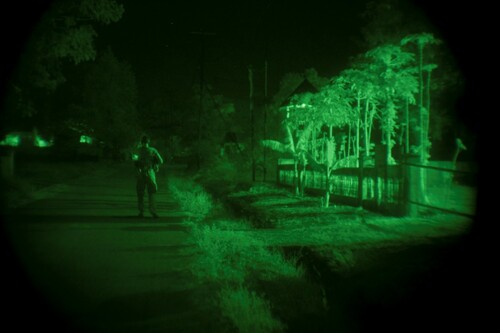
A green night-vision video frame of a person walking on a path

A ViT-32 encoder with a progressive deconvolution decoder that enhances and colorizes night-vision footage while keeping its structure intact. I curated a 40,000-image training set from ImageNet and designed a composite loss balancing perceptual quality, colour consistency and edge preservation. The model reached a colorfulness score of 39.33, above the state-of-the-art baselines we compared against.

Stock Price Prediction Using Deep Learning

CSE427 Machine Learning, Spring 2025

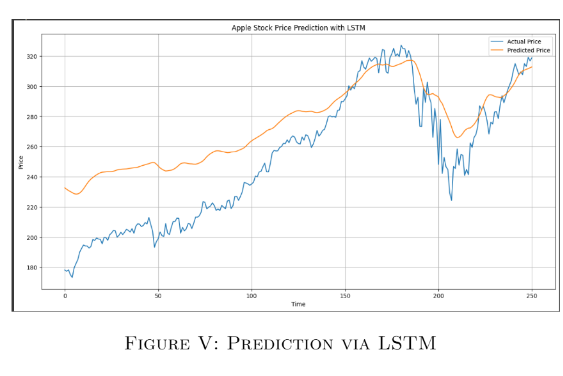
Line chart of actual and predicted Apple stock prices

LSTM, BiLSTM and AdaBoost models trained on more than twenty years of Apple (AAPL) prices with technical indicators, using sliding-window sequences, normalization and hyperparameter tuning. The BiLSTM performed best (RMSE 12.04, MAE 9.50, R2 0.90).

Text Analysis, Processing and Representation

CSE440 Natural Language Processing II, Fall 2024

Corpus statistics for Moby Dick with NLTK, cleaning and tokenizing 50,000 IMDB reviews, TF-IDF features with scikit-learn, and 100-dimensional GloVe embeddings. The vector for king − man + woman had a cosine similarity of 0.78 with queen, higher than king itself (0.75).

Money Heist Tank Game in OpenGL

CSE423 Computer Graphics, Spring 2024

A 2D tank game in Python drawn from OpenGL points, lines and circles, with keyboard and mouse controls, timed animations, scoring, and pause and restart.
Education

BSc in Computer Science, BRAC University, Dhaka

2021 to October 2025

CGPA 3.90/4.00 with Highest Distinction; 3.96 in computer science courses, and 3.98 over the final four semesters. Relevant courses include Natural Language Processing II, Machine Learning, Artificial Intelligence, Computer Vision, Data Science, Linear Algebra and Fourier Analysis, and Statistics and Probability, all with A or A+.

Higher Secondary Certificate, Cantonment Public School and College, Rangpur

2019. GPA 5.00/5.00.

Secondary School Certificate, Cantonment Public School and College, Rangpur

2017. GPA 5.00/5.00.

Selected Coursework

Mathematics and Computer Science Coursework

Undergraduate studies · BRAC University

  • Mathematics II: Integral Calculus and Differential Equations (MAT120)
  • Mathematics III: Complex Variables and Laplace Transformations (MAT215)
  • Mathematics IV: Linear Algebra and Fourier Analysis (MAT216)
  • Mathematics I: Differential Calculus and Coordinate Geometry (MAT110)
  • Elements of Statistics and Probability (STA201)
  • Discrete Mathematics (CSE230)
  • Numerical Methods (CSE330)
  • Programming Language I (CSE110)
  • Programming Language II (CSE111)
  • Digital Logic Design (CSE260)
  • Data Structures (CSE220)
  • Algorithms (CSE221)
  • Circuits and Electronics (CSE250)
  • Database Systems (CSE370)
  • Automata and Computability (CSE331)
  • Computer Architecture (CSE340)
  • Operating Systems (CSE321)
  • Computer Networks (CSE421)
  • Artificial Intelligence (CSE422)
  • Computer Graphics (CSE423)
  • Compiler Design (CSE420)
  • Software Engineering (CSE470)
  • Data Science: Coding with Real-World Data (CSE437)
  • Computer Vision: Fundamentals and Applications (CSE463)
  • Natural Language Processing II (CSE440)
  • Advanced Algorithms[Graph Theory] (CSE426)
  • Machine Learning (CSE427)
  • Thesis (CSE400)

Audited and Additional Coursework

Selected advanced topics

  • Optimization (CSE402)
  • Advanced Natural Language Processing (CSE751)
  • Probabilistic Graphical Models (CSE756)
  • Research Methodology and Seminar (CSE791)

These courses reflect additional exposure to optimization, advanced language technologies, probabilistic modeling and research methods.

Experience

Undergraduate Teaching Assistant, BRAC University

Discrete Mathematics and Complex Analysis, November 2024 to May 2025

Held consultation hours for undergraduate students, graded assignments with individual feedback, and helped faculty with course logistics and student questions.

Honours and awards

  • Graduated with Highest Distinction, BRAC University, 2025.
  • Merit Scholarship for academic results, 2024 and 2025.
  • Vice Chancellor’s Honour List three times, and Dean’s Honour List twice.
  • Ranked 19th in the written Student Tutor screening for Summer 2025, among 300 candidates shortlisted from more than 700 applicants.
  • Solved 450+ problems on Codeforces and AtCoder; placed 3rd in a divisional programming contest in school.

Skills

Languages
Python, C, C++, Java
Machine learning
PyTorch, TensorFlow, Keras, scikit-learn
Other tools
MySQL, Flask, OpenGL, Wireshark, Flex and Bison, Packet Tracer